Oneal Moore

Case Number:
Not publicly available
Case Status:
Unsolved — confirmed with LE
Date of Birth:
04/23/1931 (34 yo)
Date of Death:
06/02/1965
Date Discovered:
06/02/1965
Cause of Death:
Gunshot wounds
Location:
LA Hwy 21, Varnado, LA
Agency:
Washington Parish Sheriff's Office – 985.839.3434
Tip Line:
N/A - No Crime Stoppers
Background
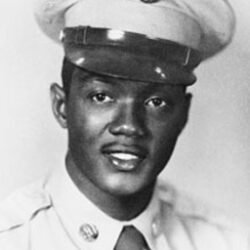
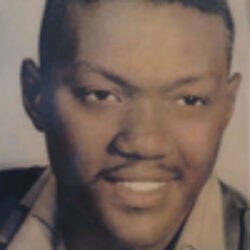
Oneal Moore was born 04/23/1931 in Poplarville, Mississippi, to Stephen and Margaret Moore. He was married to Maevella Moore, and the couple had four daughters.
He was a U.S. Army veteran. He enlisted on 05/21/1952 and was released from active duty on 04/30/1954 after approximately 23 months of service. He attained the rank of corporal.
He was active in his community and was remembered as a leader in New Zion Missionary Baptist Church, his local Masonic lodge, and the PTA.
On 06/01/1964, Oneal and David “Creed” Rogers were hired as deputies with the Washington Parish Sheriff’s Office, becoming the department’s first Black deputies. Their appointments came during a period of intense racial tension in Washington Parish. Ku Klux Klan activity was widespread in the area, and federal investigators later documented information indicating that some Klan members were angered by the hiring of Black deputies.
Oneal understood that accepting the position could place him and his family at risk. His wife later remembered that he tried to be cautious and generally avoided involvement in civil rights demonstrations, wanting simply to perform his duties as a law enforcement officer.
Oneal is interred at Moses Cemetery in Bogalusa, LA.
Case Summary
At about 10:30 pm on 06/02/1965, Oneal and Creed were on patrol in Varnado when they were diverted to investigate a reported brush fire.
As they traveled through the area, they noticed that a dark-colored pickup truck was following them. The vehicle was a 1954 or 1955 Chevrolet pickup bearing a Confederate flag on the right side of the bumper and sideboards on the truck bed.
The pickup pulled alongside the deputies’ patrol car and open fired. Oneal, who was driving, was struck in the head by a high-powered rifle round and lost control of the patrol car, which crashed into a tree. He was killed instantly. Creed was struck in the shoulder by shotgun pellets and suffered injuries that left him blind in his right eye, but was able to radio in a call for assistance and a description of the truck.
Daniel “Scrap” Fornea, a World War II Army veteran who lived nearby, was among the first people to reach the scene. He later told the FBI that he had heard approximately eight to ten shots and had seen a dark-colored early-1950s pickup following the patrol car shortly before the crash.
The shooting occurred amid ongoing civil rights demonstrations and severe racial tensions in Washington Parish. The FBI later documented numerous reports suggesting the attack may have been sanctioned or carried out by members of the Ku Klux Klan. Investigators were unable, however, to develop sufficient admissible evidence establishing who participated in the ambush.
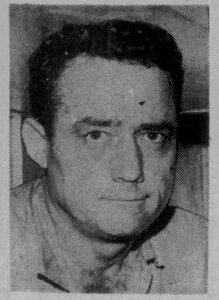 About one hour after the shooting Ernest Raphael “Ray” McElveen, 41, of Bogalusa was stopped by authorities in Tylertown, Mississippi. He was a laboratory technician at the Bogalusa Paper Mill. He was driving a black 1955 Chevrolet pickup (another account at the time said his truck was a green 1953 model) with a Confederate flag decal on the right bumper. Firearms, ammunition and other items were found in the vehicle, but none of the recovered weapons was ultimately identified as the murder weapon.
McElveen was arrested on 06/03/1965 and charged with Oneal’s murder. His $25,000 bond was paid with money raised by individuals associated with the Ku Klux Klan, and he was released nine days after the killing. The FBI conducted an extensive investigation from 1965 through 1967, interviewing more than 1,400 people and generating thousands of investigative reports. Agents examined numerous individuals, allegations and conflicting accounts but were unable to establish a prosecutable case.
The murder charge was later dismissed because of insufficient evidence.
Reopened under the Civil Rights Era Cold Case Initiative. The investigation was formally reopened in 1989 and again pursued during the 1990s and 2000s under the Civil Rights Era Cold Case Initiative. McElveen remained a prime suspect throughout the FBI investigation. They received information implicating a number of other individuals. Some witnesses reported alleged admissions or conversations identifying different combinations of men as participants in the ambush. Many of the accounts were secondhand, contradictory or could not be independently corroborated. They repeatedly searched for the firearms used in the attack. Leads resulted in searches of properties, waterways and other locations, but the murder weapons were never recovered. A gun barrel provided to the FBI decades later was tested and determined not to have been part of the weapon used to kill Oneal. Federal authorities offered rewards and made repeated appeals for information, but eventually concluded that many witnesses and subjects had died and that the remaining information consisted largely of rumors, hearsay and conflicting accounts that could not support prosecution.
Federal Investigation Officially Closed. On 03/10/2016, the U.S. Department of Justice officially closed the investigation. The decision did not identify Oneal’s killer or declare the homicide solved. The Justice Department concluded that, despite decades of investigation and considerable resources devoted to the case, investigators had been unable to obtain sufficient credible, admissible evidence to prove who committed the crime.
Suspects/Persons of Interest
- Ernest Raphael “Ray” McElveen was the only person charged with Oneal’s murder and remained a prime suspect throughout the FBI investigation. The charge was later dismissed for insufficient evidence. McElveen died in 2003. No other person was charged with Oneal’s murder.
- Numerous other individuals were named in witness accounts, alleged admissions, anonymous letters or other investigative leads, but the information was often contradictory or could not be corroborated.
Timeline
| 06/02/1965 | Ambushed while on patrol; Oneal was killed. |
| 06/03/1965 | Ernest Ray McElveen was arrested in connection with the murder. |
| 06/1965 | McElveen was released on bond; charges later dropped. |
| 1990 | FBI investigation formally reopened. |
| 2001 | FBI again reviewed the case. |
| 2009 | Case reopened under the Civil Rights Era Cold Case Initiative. |
| 03/10/2016 | U.S. DOJ closed the federal investigation. |
Limited Information – Can Ypu Help?
If you have additional details, records, photos, or other related materials about Oneal or his case, please consider sharing them.
Research Notes
This profile will be updated as pending public records requests are received.
Sources
- Southern Poverty Law Center, “O’Neal Moore,” accessed November 11, 2020.
- Police Magazine, “Chasing Ghosts in a Civil Rights Era Cop Killing,” October 22, 2010.
- Los Angeles Times, “Answers Elusive in 1965 Slaying,” June 26, 2002.
- Officer Down Memorial Page, “Deputy Sheriff O’Neal Moore,” accessed November 11, 2020.
- National Archives and Records Administration, “African American Heritage: The Deacons for Defense and Justice,” accessed November 11, 2020.
- U.S. Department of Justice, Civil Rights Division, “David Creed Rogers, O’Neal Moore — Notice to Close File,” File No. 144-32-928, March 10, 2016.
- Bogalusa Daily News, “Half Century After Murder, O’Neal Moore Remembered,” June 5, 2015.
- The Louisiana Weekly, “Slain Deputy,” June 12, 1965.
- Louisiana State Archives, Louisiana State Death Records, O’Neal Moore, Certificate No. 11330, June 2, 1965.
- National Archives and Records Administration, U.S. Headstone Applications for Military Veterans, 1861–1985, O’Neal Moore.
- Beneficiary Identification Records Locator Subsystem (BIRLS), O’Neal Moore military-service record.
rev 10/11/2026